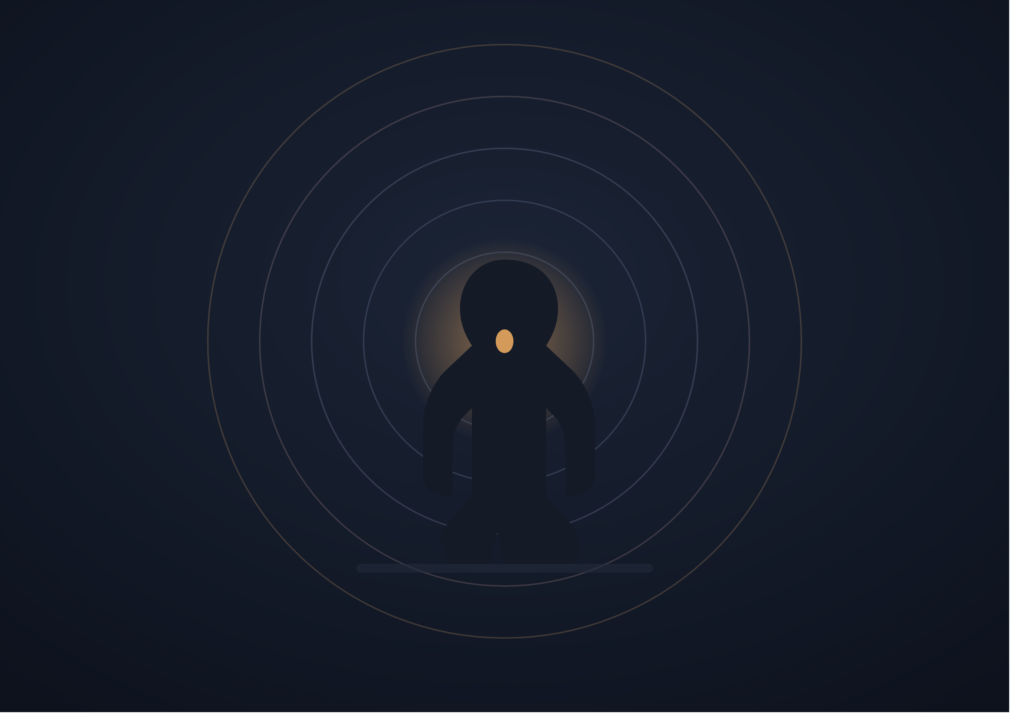
Joanne has found it difficult to form meaningful connections — with colleagues, with friends, with family. Without quite meaning to, she keeps pushing people away. She feels isolated. She feels sad. She feels drained. “What’s happening to me?” she asks, and she is not being rhetorical. She genuinely doesn’t know.
At night, after a long day at work, she lies in bed feeling like a robot. Alone in her room, she grapples with a void she can’t quite understand how she created. She recognizes that she is disconnected from herself, out of touch with her own emotions, and yet each day brings the same persistent apathy — a low hum she can’t shake, no matter how much she wants to.
This is the quiet cruelty of disconnection: it doesn’t announce itself. It doesn’t arrive as a single dramatic loss. It accumulates in small moments — a conversation cut short, an invitation declined, a feeling noticed and then pushed back down because there’s no time, no energy, no space to feel it. Joanne isn’t choosing isolation. She’s surviving in the only way that currently makes sense to her, even as that survival strategy slowly hollows her out.
Reflecting on Joanne’s experience, I find myself believing something simple yet easy to overlook: reconnecting with herself must come before reconnecting with anyone else. It’s tempting to think the solution to loneliness is more socializing, more effort with other people. But you cannot offer someone else what you don’t have access to yourself. If Joanne is estranged from her own emotions, then even her attempts at closeness will feel hollow — she’ll be going through the motions of connection without the substance of it. The robot she feels like at night isn’t just a metaphor for exhaustion; it’s a fairly precise description of what it’s like to act without feeling.
One mindfulness practice that might genuinely help her is something almost embarrassingly simple: a few quiet minutes each day devoted to deep, intentional breathing. Not as a productivity hack or a box to check, but as an actual return — to her body, to the present moment, to whatever she’s been too busy or too tired to notice. Finding a peaceful space. Closing her eyes. Breathing in slowly, breathing out slowly, and letting that be the entire task.
It sounds too small to matter. That’s exactly why it works. Deep breathing doesn’t ask Joanne to solve her isolation, name every buried feeling, or repair every strained relationship in one sitting. It asks her to do one small, physical thing that anchors her back in herself, over and over, until that anchoring becomes less foreign. The nervous system responds to breath before it responds to insight — slowing the heart rate, easing the tight chest, loosening the vigilance that comes from spending all day performing rather than feeling. Over time, that daily return to the breath becomes a return to herself: not a dramatic transformation, but a slow unclenching.
And it’s from that unclenched place — not from willpower, not from forcing herself to “be more social” — that real connection becomes possible again. Once Joanne can feel what she feels, she has something to bring to a conversation besides performance. She can notice when she’s drained and say so, instead of disappearing. She can sit with a friend without the low, static hum of disconnection humming beneath everything. The apathy doesn’t vanish overnight, but it loosens its grip, breath by breath, until the void she couldn’t quite explain starts to feel a little less empty — and a little less alone.
Alex Da Silva, LMHC